Published
Author
Julian Reed
Men's Style Guide for Summer 2026
Men's Style Guide for Summer 2026
Summer 2026 is around the corner. Men's style this year is quieter, more considered, and in many ways more interesting for it. Six trends worth watching, and what each one signals for the brands paying attention.
01 - The Unstructured Suit Returns
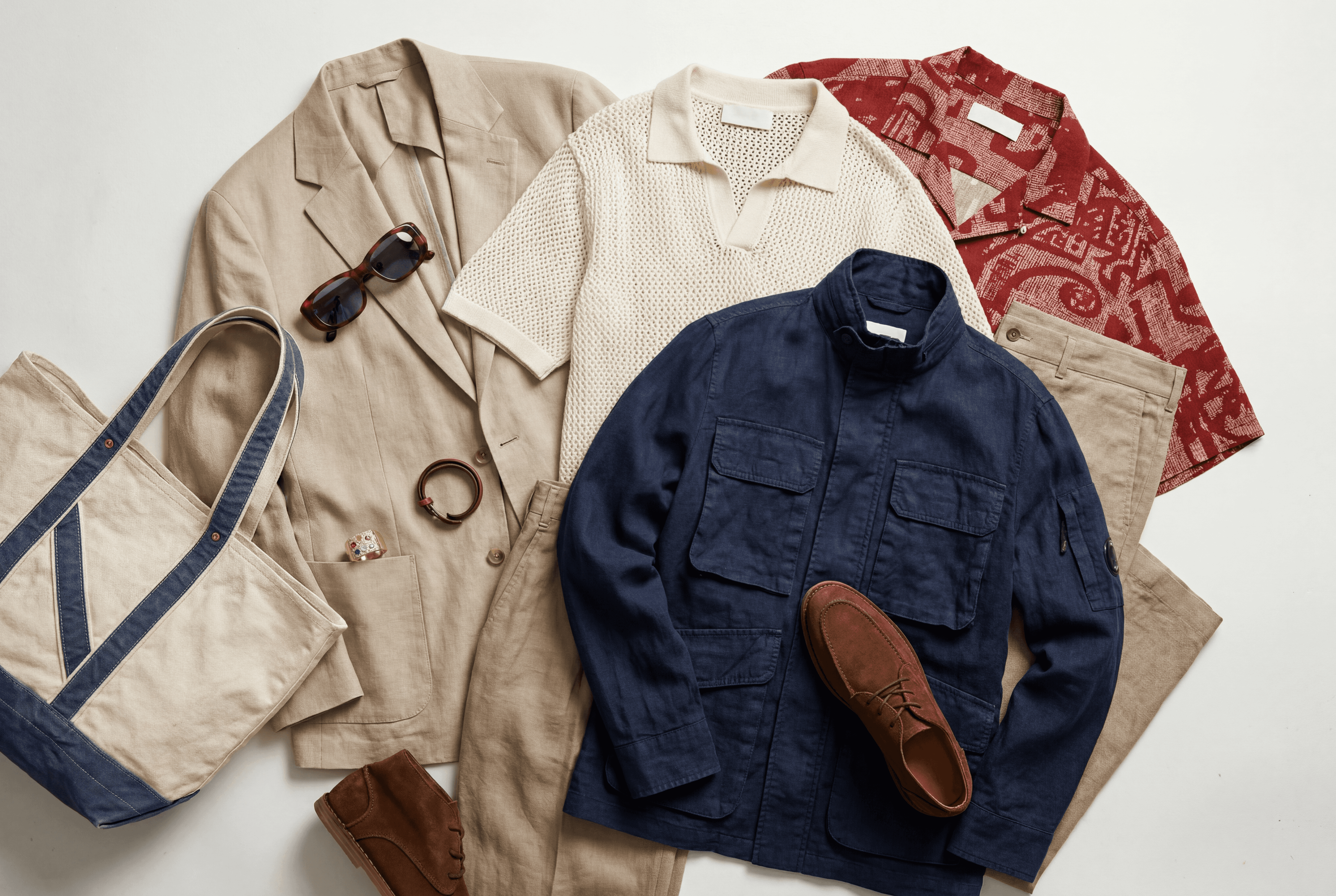
Not the stiff boardroom suit, and not the ironic thrift-store blazer either. What's gaining traction is something softer, unconstructed jackets in linen, seersucker, and open-weave cotton, worn with relaxed trousers that land just above the ankle. The silhouette reads dressed-up but moves like casualwear. It's pulling from Italian summer dressing and Southern European resort style, filtered through a generation that came of age in hoodies and hasn't forgotten how to be comfortable.
Key references: unlined blazers, natural fibers, earthy and sun-bleached tones. The sleeve is slightly long, the lapel is narrow to medium. Nothing is trying too hard.
Brand Lens - For menswear and lifestyle brands, this trend opens real whitespace between "occasion" and "everyday." Consumers in the 25-35 range are increasingly allergic to clothes that feel situational. The brands that win here are the ones that market softened tailoring as a lifestyle upgrade, not a dress code response.
02 - Technical Fabric, Civilian Silhouette
The outdoor-to-urban translation has been happening for years, but it's maturing. The aesthetic is no longer about visible branding or gear-forward signaling. Instead, technical materials, water-resistant ripstop, recycled nylon, ventilated mesh, are showing up in cuts that read more city than trail. Overshirts, lightweight anorak pullovers, and pack-away jackets in neutral or muted tones. Function is present but understated.
The consumer wearing this is likely moving between environments in a single day, work, outdoor lunch, a flight, a weekend trip. The clothes are built for that reality without advertising it.
Brand Lens - Brands positioning in this space should resist the temptation to lead with specs. The consumer already assumes performance; what they want to see is how it fits into their life. Content and campaigns that show context, not just product, are doing more work here than technical feature lists.
03 - Warm Neutrals Hold the Room
The palette this summer skews warm and dusty. Stone, sand, clay, pale terracotta, faded olive. It's a continuation of the quieter color story that started gaining ground a couple of years ago, but with more warmth in the undertones, less Scandinavian grey, more sun-weathered Mediterranean. White is still present but softer: off-white, warm ivory, vintage cream rather than optical bright.
Occasional pops of saturated color exist, a burnt orange shirt, a deep tobacco trouser, but they're typically worn as a single statement within an otherwise muted outfit. The overall effect is cohesive and considered rather than bold.
Brand Lens - For brands building seasonal collections or colorways, this palette communicates a kind of restrained sophistication that photographs well and ages gracefully. It also tends to perform well in lifestyle and editorial content. The risk is saturation, this palette is now common enough that differentiation has to come from material quality and silhouette, not color alone.
04 - The Shoe Does the Talking
In a season where the rest of the outfit is quiet, footwear is becoming the variable. Leather loafers, both penny and horsebit, are having a significant moment, worn with everything from shorts to loose trousers. Alongside them: minimalist leather sneakers in white or cream, simple leather sandals with clean straps, and occasional canvas espadrilles in natural tones.
The common thread is craft over branding. Visible logos and heavy outsoles are receding. The shoe as an object of quality, materials, construction, simplicity, is what's being noticed. It's a shift worth watching.
Brand Lens - Footwear brands and wholesale buyers should note that the consumer paying attention to this trend is prioritizing longevity and material story over seasonal novelty. Storytelling around sourcing, construction, and craft has more purchase power with this demographic than trend positioning alone.
05 - Archive Impulse, Modern Edit
Vintage and secondhand dressing is no longer a fringe behavior in this demographic, it's mainstream. But the approach has gotten more specific. The 20-35 consumer isn't just thrifting; they're archiving. Deadstock military surplus, Japanese selvedge denim from the 90s, early-era sportswear from brands that have since changed direction. The interest is in authenticity and provenance.
What's interesting is how this archive impulse is being mixed with new product. A vintage military shirt paired with a clean new linen trouser and simple leather loafers. The blend is intentional, not accidental.
Brand Lens - New brands operating in this space have an interesting challenge and opportunity. Consumers fluent in vintage can detect inauthenticity quickly. The brands earning trust here are leaning into genuine design heritage, transparent production stories, or archive-inspired capsules with clear creative rationale, not surface-level nostalgia aesthetics.
06 - Quiet Accessories, Specific Objects
Accessories in summer 2026 follow the same logic as the broader palette: reduced, but deliberate. A single object chosen carefully. Simple woven or leather bracelets. Clean canvas or nylon tote bags from independent makers. Linen pocket squares worn casually, not formally. Sunglasses with thin metal or acetate frames in tortoise or matte black.
The watch conversation has also shifted. Less hype-driven, more oriented toward mechanical watches with simple dials, field watches, dress watches, that communicate taste without announcing price. The object matters more than what it says about the person wearing it.
Brand Lens - Accessories brands, particularly smaller or independent ones, are well-positioned here. The consumer is actively looking for objects with story and intention behind them, and they're willing to seek them out beyond the obvious retail channels. Discovery-driven brands with strong creative identity are cutting through in ways that larger, noisier brands aren't.
Our Perspective
What connects these six trends is less about aesthetics than about attitude. The men's consumer at 20-35 in 2026 is not dressing for attention. He's dressing with attention, to quality, to fit, to the story behind the object. The era of loud signals and visible branding as primary status currency is losing ground, at least in this corner of the market.
For brands, that shift is both a challenge and an opening. The challenge: you can't shortcut authenticity with a campaign. The opening: consumers who are genuinely engaged with what they wear are also genuinely loyal to brands that earn their trust. The work is slower, but the relationship is stickier.
Style, ultimately, is always a form of communication. This season, the message is just quieter than it used to be.
Summer 2026 is around the corner. Men's style this year is quieter, more considered, and in many ways more interesting for it. Six trends worth watching, and what each one signals for the brands paying attention.
01 - The Unstructured Suit Returns
Not the stiff boardroom suit, and not the ironic thrift-store blazer either. What's gaining traction is something softer, unconstructed jackets in linen, seersucker, and open-weave cotton, worn with relaxed trousers that land just above the ankle. The silhouette reads dressed-up but moves like casualwear. It's pulling from Italian summer dressing and Southern European resort style, filtered through a generation that came of age in hoodies and hasn't forgotten how to be comfortable.
Key references: unlined blazers, natural fibers, earthy and sun-bleached tones. The sleeve is slightly long, the lapel is narrow to medium. Nothing is trying too hard.
Brand Lens - For menswear and lifestyle brands, this trend opens real whitespace between "occasion" and "everyday." Consumers in the 25-35 range are increasingly allergic to clothes that feel situational. The brands that win here are the ones that market softened tailoring as a lifestyle upgrade, not a dress code response.
02 - Technical Fabric, Civilian Silhouette
The outdoor-to-urban translation has been happening for years, but it's maturing. The aesthetic is no longer about visible branding or gear-forward signaling. Instead, technical materials, water-resistant ripstop, recycled nylon, ventilated mesh, are showing up in cuts that read more city than trail. Overshirts, lightweight anorak pullovers, and pack-away jackets in neutral or muted tones. Function is present but understated.
The consumer wearing this is likely moving between environments in a single day, work, outdoor lunch, a flight, a weekend trip. The clothes are built for that reality without advertising it.
Brand Lens - Brands positioning in this space should resist the temptation to lead with specs. The consumer already assumes performance; what they want to see is how it fits into their life. Content and campaigns that show context, not just product, are doing more work here than technical feature lists.
03 - Warm Neutrals Hold the Room
The palette this summer skews warm and dusty. Stone, sand, clay, pale terracotta, faded olive. It's a continuation of the quieter color story that started gaining ground a couple of years ago, but with more warmth in the undertones, less Scandinavian grey, more sun-weathered Mediterranean. White is still present but softer: off-white, warm ivory, vintage cream rather than optical bright.
Occasional pops of saturated color exist, a burnt orange shirt, a deep tobacco trouser, but they're typically worn as a single statement within an otherwise muted outfit. The overall effect is cohesive and considered rather than bold.
Brand Lens - For brands building seasonal collections or colorways, this palette communicates a kind of restrained sophistication that photographs well and ages gracefully. It also tends to perform well in lifestyle and editorial content. The risk is saturation, this palette is now common enough that differentiation has to come from material quality and silhouette, not color alone.
04 - The Shoe Does the Talking
In a season where the rest of the outfit is quiet, footwear is becoming the variable. Leather loafers, both penny and horsebit, are having a significant moment, worn with everything from shorts to loose trousers. Alongside them: minimalist leather sneakers in white or cream, simple leather sandals with clean straps, and occasional canvas espadrilles in natural tones.
The common thread is craft over branding. Visible logos and heavy outsoles are receding. The shoe as an object of quality, materials, construction, simplicity, is what's being noticed. It's a shift worth watching.
Brand Lens - Footwear brands and wholesale buyers should note that the consumer paying attention to this trend is prioritizing longevity and material story over seasonal novelty. Storytelling around sourcing, construction, and craft has more purchase power with this demographic than trend positioning alone.
05 - Archive Impulse, Modern Edit
Vintage and secondhand dressing is no longer a fringe behavior in this demographic, it's mainstream. But the approach has gotten more specific. The 20-35 consumer isn't just thrifting; they're archiving. Deadstock military surplus, Japanese selvedge denim from the 90s, early-era sportswear from brands that have since changed direction. The interest is in authenticity and provenance.
What's interesting is how this archive impulse is being mixed with new product. A vintage military shirt paired with a clean new linen trouser and simple leather loafers. The blend is intentional, not accidental.
Brand Lens - New brands operating in this space have an interesting challenge and opportunity. Consumers fluent in vintage can detect inauthenticity quickly. The brands earning trust here are leaning into genuine design heritage, transparent production stories, or archive-inspired capsules with clear creative rationale, not surface-level nostalgia aesthetics.
06 - Quiet Accessories, Specific Objects
Accessories in summer 2026 follow the same logic as the broader palette: reduced, but deliberate. A single object chosen carefully. Simple woven or leather bracelets. Clean canvas or nylon tote bags from independent makers. Linen pocket squares worn casually, not formally. Sunglasses with thin metal or acetate frames in tortoise or matte black.
The watch conversation has also shifted. Less hype-driven, more oriented toward mechanical watches with simple dials, field watches, dress watches, that communicate taste without announcing price. The object matters more than what it says about the person wearing it.
Brand Lens - Accessories brands, particularly smaller or independent ones, are well-positioned here. The consumer is actively looking for objects with story and intention behind them, and they're willing to seek them out beyond the obvious retail channels. Discovery-driven brands with strong creative identity are cutting through in ways that larger, noisier brands aren't.
Our Perspective
What connects these six trends is less about aesthetics than about attitude. The men's consumer at 20-35 in 2026 is not dressing for attention. He's dressing with attention, to quality, to fit, to the story behind the object. The era of loud signals and visible branding as primary status currency is losing ground, at least in this corner of the market.
For brands, that shift is both a challenge and an opening. The challenge: you can't shortcut authenticity with a campaign. The opening: consumers who are genuinely engaged with what they wear are also genuinely loyal to brands that earn their trust. The work is slower, but the relationship is stickier.
Style, ultimately, is always a form of communication. This season, the message is just quieter than it used to be.